April Dream: The Display Font with Personality to Spare
There's a particular kind of energy that jumps off a page when typography is done right. You've felt it before—scrolling through Instagram, flipping through a magazine, or walking past a shop window. Something catches your eye, holds it, and makes you want to lean in closer. More often than not, that magnetic pull comes down to one critical design choice: the font. And if you've been searching for a typeface that delivers instant charisma without sacrificing versatility, April Dream might be exactly what your next project needs.
What Makes This Typeface Stand Out
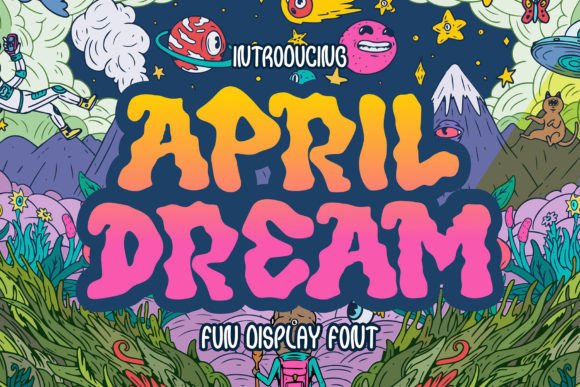
April Dream is a display font built for moments when ordinary letterforms won't cut it. Every character in this typeface carries its own personality—slightly eccentric, unmistakably bold, and carefully refined to create visual impact the moment it appears on screen or paper. The letters aren't just decorative; they're engineered to make text feel alive.
What separates a truly effective display font from one that merely looks "different" is intentionality. April Dream doesn't rely on gimmicks or excessive ornamentation. Instead, each glyph has been individually adjusted to balance originality with cohesion. The result is a typeface that feels playful and energetic without descending into chaos. It walks that fine line between whimsy and professionalism that so many creative fonts fail to find.
For designers, small business owners, and content creators, that balance matters enormously. You need a font that commands attention but still communicates clearly. You want something that feels fresh and distinctive without alienating your audience. April Dream delivers on both fronts, making it a genuinely useful addition to any design toolkit rather than a novelty you'll use once and forget.
Where Creative Projects Come Alive
The practical applications for a font like this are broader than you might initially assume. Yes, it excels in the obvious places—event posters, party invitations, festival branding. But its versatility extends well beyond those expected use cases.
Branding and Logo Design: If you're building a brand identity for a boutique business, a creative studio, a lifestyle brand, or anything that benefits from a warm, approachable aesthetic, April Dream can serve as the foundation of your visual language. Think about the logos that stick in your memory. They usually have something distinctive about their typography, something that makes them impossible to confuse with a competitor. A display font with this much character gives you that differentiation built right in.
Packaging Design: Shelf appeal is real. Whether you're designing labels for a small-batch candle company, packaging for artisanal food products, or sleeves for handmade cosmetics, the typography on your packaging is often the first thing a potential customer notices. April Dream brings that handcrafted, boutique energy that signals quality and care—exactly the impression most small brands want to make.
Social Media Graphics: In a feed full of generic sans serif text overlaid on stock photos, a bold display font stops the scroll. April Dream works beautifully for quote graphics, announcement posts, story highlights, and promotional banners. It gives your content a recognizable visual signature that followers will start associing with your brand over time.
Editorial and Print Layouts: Magazine headlines, book chapter titles, blog post headers, and newsletter banners all benefit from typography that pulls readers in. Pairing a striking display font like this with a clean body font creates visual hierarchy that guides the eye and makes content feel polished and intentional.
Merchandise and Digital Products: T-shirts, mugs, tote bags, stickers, printable wall art, digital planners—the list of products where distinctive typography adds real value keeps growing. April Dream's personality translates well across physical and digital mediums, giving your merchandise a cohesive look that feels designed rather than assembled.
Website Design: While display fonts aren't typically used for body text on websites, they're invaluable for hero sections, landing page headlines, call-to-action buttons, and section headers. Used strategically, a font like April Dream can set the entire tone for a website experience, signaling to visitors exactly what kind of brand they're engaging with before they read a single paragraph of copy.
Making Typography Work for Your Brand
Choosing a font isn't just an aesthetic decision—it's a strategic one. The typography you use across your marketing materials, products, and digital presence communicates volumes about your brand's personality, values, and positioning. A playful display font suggests creativity and approachability. A rigid geometric sans serif implies precision and modernity. Understanding what your font choices say about your brand helps you make smarter design decisions.
April Dream speaks to brands and creators who want to feel accessible, imaginative, and full of life. If your target audience responds to warmth, creativity, and a touch of whimsy—think creative professionals, lifestyle consumers, parents shopping for children's products, event planners, or anyone in the wellness and self-care space—this typeface aligns naturally with those sensibilities.
That said, context matters. A font that works brilliantly for a yoga studio's workshop poster might not be the right fit for a law firm's business cards. Understanding your audience's expectations and your brand's positioning helps you determine when April Dream is the perfect choice and when a more restrained option might serve better.
Pairing, Testing, and Getting It Right
One of the most practical considerations when working with any display font is pairing. April Dream's distinctive character means it benefits from being balanced with simpler companion typefaces. A clean sans serif or a straightforward serif font for body text creates the contrast needed to let the display font shine without overwhelming the overall design.
Try pairing it with widely available options like a modern sans serif for digital applications or a classic serif for print layouts. The key is contrast in weight, style, and complexity. If your headline font is bold and expressive, your supporting text should be calm and readable. This isn't a hard rule, but it's a reliable starting point that prevents designs from feeling visually cluttered.
Always test your font choices in context before committing. Set your actual headline text—not just the alphabet—in April Dream. View it at the size you'll actually use. Check how it looks on different screens if you're designing for digital. Print a sample if you're working on physical materials. What looks stunning at 72 points on your monitor might need kerning adjustments at smaller sizes or on certain paper stocks.
Readability deserves special attention with any display typeface. April Dream's distinctive letterforms are designed to be legible, but display fonts are inherently meant for short-form text—headlines, titles, single words, and short phrases. Don't set entire paragraphs in a display font. Use it where impact matters most, and let a complementary typeface handle the heavy lifting of longer content.
Practical Considerations for Professional Use
Before incorporating any font into client work or commercial projects, review the licensing terms carefully. Most premium fonts come with specific licensing structures—desktop licenses for print work, webfont licenses for digital use, and sometimes separate licenses for embedding in products or applications. Understanding these terms protects you legally and ensures your clients are properly covered.
April Dream, like many quality design assets, is built for commercial use, which means you can confidently use it in paid client projects, products for sale, and branded materials without worrying about license violations. Still, reading the fine print is always worthwhile. Know what's included, whether the license covers the number of users or installations you need, and whether extended licensing is available for larger-scale applications like app development or mass-produced merchandise.
Take time to explore all the included styles and alternates as well. Many premium fonts ship with multiple weights, stylistic alternates, ligatures, and special characters that expand your creative options significantly. These extras often go unused simply because designers don't realize they're available. Spending a few minutes exploring the full character set can unlock design possibilities you hadn't considered.
Bringing It All Together
Great design is ultimately about communication. Every visual choice you make—color, layout, imagery, and especially typography—either strengthens or weakens the message you're trying to send. A font like April Dream gives you a tool for communicating energy, creativity, and personality in a single design decision. It doesn't try to be everything to everyone, and that's precisely what makes it effective.
The projects that benefit most from this kind of typeface are the ones where personality is a feature, not a liability. Where standing out is the goal. Where the brand or creator behind the work wants to be remembered not just for what they said, but for how it felt to encounter their message. If that sounds like the direction you're heading, April Dream belongs in your design toolkit.
Experiment with it. Set your next headline in it. See how it transforms a layout you've been struggling with. Sometimes the right typeface doesn't just improve a design—it redefines the entire creative direction. And that's the kind of discovery that makes the work worth doing.