Puckyla: The Friendly Typeface for Playful Branding
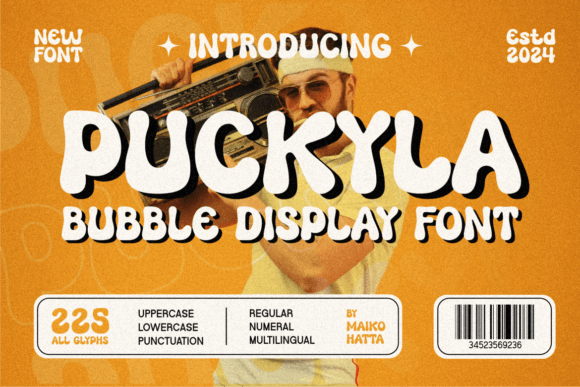
Every brand has a voice, and that voice isn't just heard—it's seen. For businesses targeting families, children, or anyone who appreciates a softer, more approachable aesthetic, the typography you choose does more than spell out words; it sets an emotional tone. If you’ve been searching for a font that feels immediately welcoming and cheerful, you may have stumbled upon Puckyla. This display font is a standout in the world of modern typography, specifically engineered to bridge the gap between professionalism and playfulness.
What makes Puckyla distinct is its architectural DNA. Unlike the sharp edges of a traditional sans serif font or the strict geometry of a serif font, Puckyla relies on round, wide letter shapes with deeply curved corners. This design choice eliminates visual tension. There is nothing aggressive about the typeface; instead, it oozes a soft, friendly impression that feels safe and inviting. For designers, this is a crucial asset. When a logo needs to convey trust without being boring, or when a children's book cover needs to scream "fun" without looking chaotic, Puckyla steps in as the perfect solution.
Why Soft Geometry Works for Youthful Brands
In visual communication, sharp angles often signal urgency, technology, or aggression. Conversely, curves signal nature, comfort, and playfulness. Puckyla leans heavily into the latter. Its "bubbly" aesthetic makes it a premium font choice for specific niches. If you are designing for a daycare center, a pediatric clinic, a toy store, or a confectionery brand, this typeface immediately communicates the right vibe. It tells the viewer that your brand is approachable and fun.
However, the utility of Puckyla extends beyond just children’s products. We are living in an era where "brand personality" is king. Many startups and tech companies are moving away from cold, corporate aesthetics in favor of warmer, more human-centric designs. Puckyla fits perfectly into this shift. It can soften the look of a financial app for young adults or add a touch of whimsy to a lifestyle blog. The goal is to use its friendly nature to lower the barrier between the brand and the consumer, making the interaction feel less transactional and more relational.
Practical Applications: From Packaging to Pixels
The versatility of a display font like Puckyla allows it to shine across various mediums. Because it is designed to be eye-catching, it works best for headlines, sub-headers, and logos rather than long blocks of body text. Here is how you can practically apply this typeface to your creative projects:
- Packaging Design: On the shelf, Puckyla stands out. Its wide letter shapes ensure legibility even from a distance. Imagine a box of organic cookies or a line of artisanal soaps; the font helps the product feel handmade and wholesome.
- Social Media Graphics: In the fast-scrolling environment of Instagram or TikTok, you have milliseconds to capture attention. The unique, rounded structure of Puckyla creates a distinct silhouette that stops the thumb. It is excellent for quote graphics, sale announcements, and story headers.
- Logo Design: A logo needs to be memorable. Puckyla’s curved corners give a logo a custom, bespoke feel. It works particularly well for brands that want to avoid the generic look of standard system fonts.
- Invitations and Stationery: For wedding planners or party suppliers, Puckyla offers a modern alternative to traditional script fonts. It feels celebratory and joyous, perfect for birthday invitations or baby shower thank-you cards.
- Merchandise: On t-shirts, tote bags, and mugs, Puckyla reads clearly. Its bold structure holds up well on fabric and physical goods, maintaining visual consistency across different materials.
Mastering Font Pairings and Hierarchy
While Puckyla is a star player, it needs a supporting cast to handle the heavy lifting of body copy. Because Puckyla is a display font with a strong personality, pairing it requires a bit of strategy to maintain readability and professional presentation.
The golden rule of font pairing is contrast. Since Puckyla is rounded and wide, you should pair it with a more neutral, narrower typeface for your body text. A clean sans serif font with a regular weight works beautifully here. The neutrality of the sans serif will allow the headers written in Puckyla to pop without competing for attention. Avoid pairing Puckyla with other highly decorative or handwritten fonts, as this can make your layout look cluttered and difficult to read.
Consider the hierarchy of your content. Use Puckyla for the H1 and H2 headers—the big ideas that you want to stand out. Then, switch to your chosen sans serif for the paragraph text. This creates a visual rhythm that guides the reader's eye naturally down the page. This approach improves user engagement because the content feels organized and easy to digest.
Readability and Technical Considerations
One of the most common mistakes in creative design is prioritizing style over substance. While Puckyla is undeniably stylish, you must always test for readability. Because the letters are wide and round, they can take up more horizontal space than a standard condensed font.
When using Puckyla for web design or digital products, pay close attention to your font size and line height. If the text is too small, the curved details might blur together on lower-resolution screens. It is best used at larger sizes where its charming details can be fully appreciated. If you are using it for a blog headline, ensure there is enough padding around the text so it doesn't feel cramped.
Furthermore, always review the specific font styles included in the family. Does the premium font version come with different weights? Does it include alternate characters or ligatures? Utilizing these features can add depth to your designs. For instance, if Puckyla includes a bold version, you can use that for emphasis within a sub-header, adding variety to your layout without introducing a new typeface.
Licensing and Commercial Use
For small business owners and entrepreneurs, the legal aspect of typography is often overlooked but vital. If you intend to use Puckyla for commercial purposes—such as on products you sell, client work, or business marketing assets—you must ensure you have the correct commercial license.
Many free fonts found online are for personal use only. Using them on a commercial website or on packaging can lead to legal issues down the line. Investing in a legitimate license for a high-quality typeface like Puckyla is a smart business move. It ensures that your brand identity is built on solid legal ground and supports the typographers who create these design assets. Always read the End User License Agreement (EULA) to understand where and how you can deploy the font.
Building a Cohesive Brand Identity
Ultimately, typography is a tool for storytelling. Choosing Puckyla signals that your brand values friendliness, creativity, and approachability. It helps build a cohesive visual identity that resonates with your target audience. Whether you are a designer crafting a new visual system for a client, or an entrepreneur launching a new product line, the right typeface acts as the glue that holds your visual elements together.
By incorporating Puckyla into your design toolkit, you gain a versatile creative font that can adapt to various contexts—from a playful poster to a professional digital product. It reminds us that design doesn't always have to be serious; sometimes, the most effective way to connect with an audience is to simply offer a warm, visual smile.