Why Kids Space Works for Playful Branding and Design
There's a moment in every creative project where you realize the typography needs to do more than just present information—it needs to feel right. You're designing a children's activity book, launching a toy brand's Instagram presence, or creating packaging for organic baby snacks, and suddenly the standard sans serif you defaulted to feels sterile. Flat. Lifeless. That's when a typeface like Kids Space enters the conversation, not as a gimmick, but as a genuine solution for projects that demand warmth without sacrificing clarity.
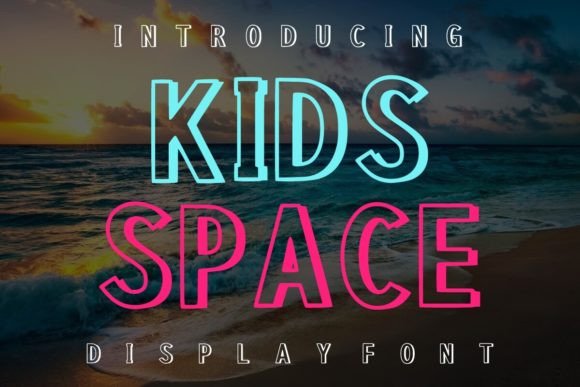
Kids Space is an assertive, outline-style display font built for visibility and personality. Its rounded letterforms and bold strokes read effortlessly at both large and mid-range sizes, which makes it surprisingly versatile for a typeface that wears its playful character so openly. The outline treatment gives designers an extra dimension to work with—fill it with color, layer it over imagery, or let the interior breathe against a textured background. It's this flexibility that separates a good display font from one that actually earns its place in your design toolkit.
A Typeface That Bridges Craft and Professional Design
What makes Kids Space genuinely useful—and not just charming—is how naturally it adapts across different creative contexts. A crafter making custom birthday invitations can use it for headline text that kids will actually want to read. A small business owner designing product labels for a children's clothing line can apply it to hang tags, care instructions, and storefront signage with consistent results. A content creator building Pinterest pins for educational printables will find that its bold geometry pops on both phone screens and desktop monitors.
This kind of cross-contextual reliability matters more than most people realize. When your brand uses the same typeface across packaging, social media graphics, website headers, and printed materials, you build visual consistency without effort. Customers start recognizing your aesthetic before they even read the words. That's not theory—it's how brands like Oatly, Method, and countless Etsy shops have carved out distinct visual identities using typefaces with strong, recognizable personalities.
Consider a children's bookstore redesigning its entire visual presence. The owner needs a typeface for the shop's logo, window displays, loyalty cards, email newsletters, tote bags, and the bookmarks tucked inside every purchase. Kids Space handles all of these with a unified voice. Its outline style means it can be printed in a single color on merchandise or filled with gradient effects on digital platforms without losing its core identity. That's practical branding power.
Where Display Fonts Like This One Actually Shine
Display fonts occupy a specific niche in typography. They're not meant for body copy or lengthy paragraphs—trying to set a 500-word product description in a bold outline font would be exhausting to read. But for the moments where you need to grab attention, communicate energy, or signal a specific audience, the right display typeface becomes indispensable.
Kids Space excels in contexts like:
- Logo design for toy companies, daycare centers, pediatric practices, tutoring services, and family-focused brands
- Packaging design for children's snacks, craft kits, bath products, and educational toys
- Social media graphics where bold, readable text needs to stop someone mid-scroll on Instagram or TikTok
- Poster and flyer design for school events, summer camps, library programs, and community activities
- Book covers and interior chapter headings for children's literature, activity books, and young reader editions
- Digital products like printable worksheets, flashcards, planners, and educational PDFs sold on platforms such as Etsy or Gumroad
- Website headers and hero sections for kid-focused e-commerce stores or family lifestyle blogs
- Invitations and greeting cards for birthdays, baby showers, holidays, and school celebrations
- Merchandise including t-shirts, mugs, stickers, and backpacks targeting young audiences or their parents
The outline style deserves particular attention here. Unlike solid display fonts that can feel heavy or overwhelming, Kids Space's outlined letterforms create a lighter visual weight even at large sizes. This makes it ideal for designs that need to feel airy and approachable rather than aggressive. On a children's menu at a restaurant, for instance, solid block letters might dominate the page. An outline font leaves room for illustrations, nutritional info, and playful doodles to coexist without visual clutter.
Pairing Kids Space with Supporting Typefaces
No single font should carry an entire design system alone. Even the most personality-rich display typeface needs a complementary partner for longer text, supporting details, and functional elements like pricing, addresses, or fine print. The key to successful font pairing is contrast without conflict.
Kids Space pairs well with clean, geometric sans serif fonts for a modern, approachable look. Think of something like Poppins, Nunito, or Quicksand for body text—their rounded terminals echo the friendly curves of Kids Space without competing for attention. If your brand leans slightly more editorial or traditional, a soft serif like Lora or Merriweather can ground the display font with a sense of trustworthiness.
Avoid pairing it with other highly decorative or handwritten fonts. Two expressive typefaces fighting for dominance creates visual noise rather than hierarchy. The display font gets the headlines. The supporting font handles everything else. This simple rule applies whether you're designing a single social media post or building an entire brand identity system.
Practical Considerations Before You Commit
Before incorporating any premium font into a project—especially one intended for commercial use—there are a few practical steps worth taking.
Test it at the sizes you'll actually use. A font that looks stunning in a 200-point headline might lose its charm at 48 points. Open your design software, set some real text—not just "Lorem ipsum"—and evaluate how the letterforms hold up at different scales. Kids Space's bold construction helps it maintain readability across a range of display sizes, but you should always verify this against your specific use case.
Check what's included in the font package. Quality display fonts often come with multiple styles—regular, bold, italic, condensed, or in the case of outline fonts, filled and unfilled variants. Understanding the full scope of what you're working with prevents you from reinventing the wheel. If the font already includes a solid version alongside the outline, you have built-in flexibility for hierarchy and emphasis within a single typeface family.
Review the licensing terms carefully. This step gets overlooked constantly, and it's where many designers and small business owners run into trouble. A font licensed for personal use only cannot legally appear on products you sell, client work you deliver, or commercial websites you operate. Look for fonts that offer clear commercial licensing—ideally with terms that cover print, digital, and merchandise applications. If you're a freelancer or agency, confirm whether the license allows use across multiple client projects or requires a separate purchase per client.
Consider your audience's expectations. A typeface for a pediatric dental practice needs to feel welcoming but still professional. A font for a children's YouTube channel can be bolder and more energetic. Kids Space walks this line well—its assertive personality reads as confident rather than childish—but context still matters. Match the font's energy to the tone your audience expects.
Building a Visual Identity Around a Single Strong Typeface
One of the most overlooked strategies in small-business branding is anchoring your entire visual system around a single distinctive typeface. It simplifies decision-making, speeds up content creation, and builds the kind of visual memory that turns casual viewers into loyal customers.
When you choose a typeface like Kids Space as a cornerstone of your brand identity, you're making a deliberate statement: your brand is approachable, energetic, and designed with care. Every Instagram story, every product label, every email header reinforces that message through consistent typographic choices. Over time, customers begin associating that visual style with your business—even before they consciously register the words on the screen.
This is especially powerful for brands operating in crowded markets. A children's clothing line competing against hundreds of Etsy shops needs every visual advantage it can get. A distinctive, well-chosen display font applied consistently across all touchpoints creates recognition that stock fonts and generic templates simply cannot replicate.
The best creative decisions are the ones that solve multiple problems at once. A typeface that's readable, distinctive, versatile, and licensed for commercial use isn't just a design asset—it's a foundational business tool. Whether you're a solo crafter shipping handmade goods from your kitchen table or a growing brand managing a team of content creators, the typography you choose shapes how people perceive everything you make. Choose deliberately, test thoroughly, and let the right typeface do the heavy lifting that words alone cannot.