Sweet Hysteria: A Playful Display Font for Creative Projects
There's a moment in every creative project where the typeface you choose either lifts the entire design or quietly undermines it. You've spent hours on a logo, a social media campaign, or an invitation, and something still feels off. More often than not, the font is the culprit — too stiff, too generic, or simply lacking the personality your project demands. That's where a typeface like Sweet Hysteria enters the conversation, offering a distinctive voice that bridges playfulness and polish in a way that's surprisingly versatile.
What Makes This Typeface Stand Out
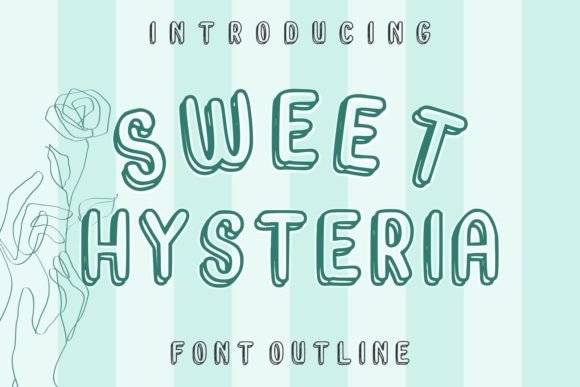
Sweet Hysteria is a display font designed for moments when you need your typography to make a statement without shouting. Its letterforms carry a sense of energy — slightly irregular curves, a handcrafted quality, and enough visual interest to hold attention on a greeting card, a headline, or a product label. Unlike rigid geometric typefaces that feel corporate, or overly ornate scripts that sacrifice legibility, this font sits in a sweet spot that many designers find genuinely useful.
The character set includes uppercase and lowercase letters, numerals, punctuation, and a range of stylistic alternates that let you customize the look depending on context. Whether you're working on a bakery's brand identity, a podcast cover, or a set of printable wall art, the font adapts to the mood you're trying to create. It doesn't try to be everything — but what it does, it does with real personality.
Where This Font Truly Shines
Think about the projects where type needs to carry emotional weight. A wedding invitation that should feel romantic but not stuffy. A children's product label that needs to be fun without looking amateurish. A blog header that invites readers in rather than pushing them away. Sweet Hysteria works across these scenarios because its design language is expressive yet controlled.
For branding and logo design, the font gives small businesses and startups a way to stand out from the sea of Montserrat-and-Playfair combinations that dominate modern branding. A boutique candle company, a specialty coffee roaster, or an indie skincare line could use this typeface to signal creativity and approachability from the very first glance. The key is that it doesn't look like a default choice — it looks intentional, which is exactly what good branding requires.
In packaging design, readability at a distance matters, but so does shelf appeal. Sweet Hysteria's slightly bold, rounded forms hold up well on labels and boxes, especially when paired with a clean sans serif for body copy. It draws the eye without overwhelming the product information, which is a balance that many display fonts fail to achieve.
For social media graphics, the font's playful energy translates beautifully to Instagram posts, Pinterest pins, and story templates. Content creators who need to produce consistent, on-brand visuals week after week benefit from having a typeface that's distinctive enough to become recognizable but flexible enough to work across different topics and moods. A food blogger could use it for recipe titles; a fitness coach might set motivational quotes in it; a travel creator could pair it with landscape photography for a cohesive feed aesthetic.
Pairing and Practical Considerations
No display font works in isolation. The real power of a typeface like Sweet Hysteria comes alive when you pair it thoughtfully with complementary fonts. A general rule: if your headline font has personality, your body text should be quieter. Pair Sweet Hysteria with a straightforward sans serif like Open Sans, Lato, or even a simple serif like Georgia for longer passages. The contrast creates visual hierarchy and keeps your layouts from feeling chaotic.
Readability is always worth testing before you commit. Set a few sample phrases at the size you plan to use — whether that's a 48-point headline on a poster or a 24-point title on a website — and view them on different screens or in print. Display fonts are designed for larger sizes, so avoid setting paragraphs of body text in Sweet Hysteria. Use it where it belongs: headlines, subheadings, pull quotes, logos, and short bursts of impactful text.
Check which styles are included with the font family. Some premium fonts come with regular, bold, italic, and condensed variations that give you more flexibility across a single project. Understanding what's available upfront saves time during the design process and helps you maintain visual consistency across different materials — from a website hero banner to a printed business card.
Commercial Use and Licensing
If you're planning to use Sweet Hysteria for commercial work — client projects, products for sale, merchandise, or marketing materials — take a moment to review the licensing terms. Most premium fonts from reputable foundries include commercial licenses, but the specifics vary. Some licenses cover unlimited projects; others are per-project or per-user. If you're a freelancer working across multiple clients, or a small business owner creating assets in-house, understanding these terms protects you legally and ensures the font creator is fairly compensated.
This matters more than many people realize. Using a font without the proper license can lead to legal headaches down the road, especially if your brand grows or your designs get widely distributed. A few minutes of reading the license agreement now prevents problems later.
Matching Typography to Your Project Goals
Before choosing any font, get clear on what your project needs to communicate. A typeface is a visual shortcut to emotion and expectation. Rounded, playful letterforms suggest warmth and friendliness. Sharp, angular ones convey precision and edge. Sweet Hysteria leans toward the former — it's approachable, energetic, and slightly whimsical without being childish.
That makes it a strong fit for brands and projects that want to feel human, creative, and inviting. Think handmade goods, lifestyle content, event invitations, editorial spreads aimed at younger audiences, or digital products like planners and worksheets. It's less suited for legal documents, financial reports, or anything requiring strict formality — but that's true of any display font.
The best approach is to test the font in context. Drop it into your existing design files. See how it interacts with your color palette, your imagery, and your other typographic choices. A font that looks beautiful in a specimen sheet might not work in your specific layout, and vice versa. Real-world testing beats theoretical preference every time.
Ultimately, a typeface like Sweet Hysteria gives you one more tool in your creative toolkit — a way to inject personality into projects that might otherwise blend into the background. Used thoughtfully, it helps your designs feel more cohesive, more intentional, and more engaging to the people you're trying to reach.